

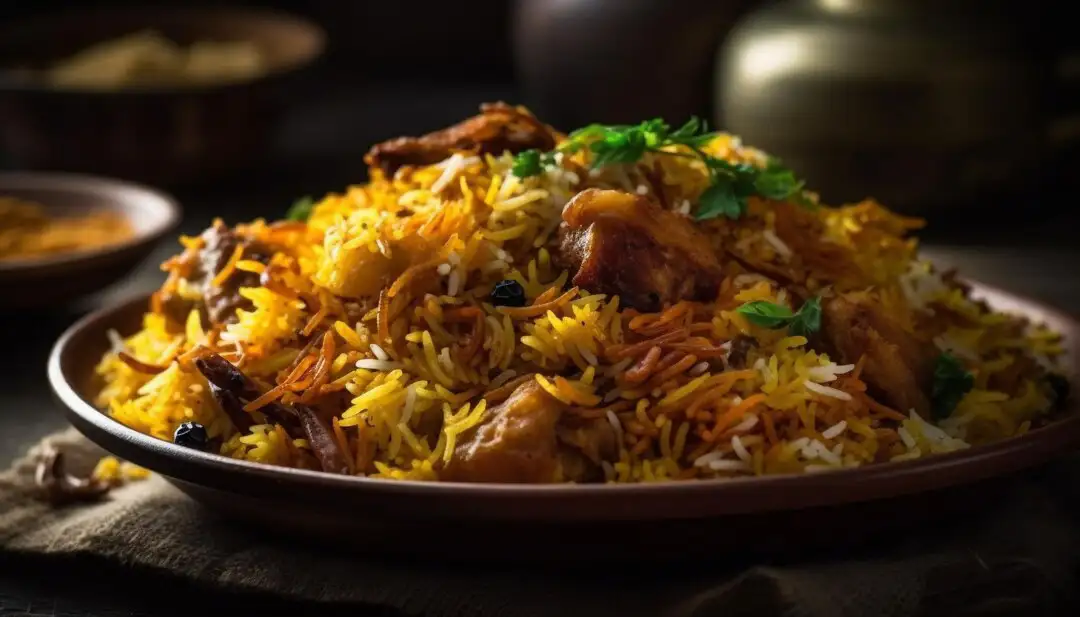
Most of Singapore’s authentic Hyderabadi Dum Biryani comes out of Little India and the surrounding pockets of Serangoon Road, Syed Alwi Road, and Tekka Centre, where family run kitchens have been cooking the dish for decades using the traditional sealed pot method, though a handful of newer restaurants across the island have picked up the style too.
Biryani shows up on nearly every Indian restaurant menu in Singapore, but the Hyderabadi Dum Biryani version is a specific thing, cooked in a sealed pot over low heat rather than fried or tossed together quickly. Sankranti, a family run restaurant on Syed Alwi Road, is one of the kitchens in Little India built around this exact style. Finding the real version means knowing where to look and what separates a proper dum biryani from a rushed one.
What Should You Look for in an Authentic Hyderabadi Biryani Restaurant?
Not every restaurant that lists “biryani” on the menu is cooking it the Hyderabadi way. A few signs separate the real version from a shortcut one.
- Rice cooked in a sealed handi or pot, not stir fried in a wok
- Long grain basmati rice, layered rather than mixed with the meat
- Mutton or chicken marinated in yogurt and spices before cooking
- Mirchi ka salan and a yogurt based raita served alongside
- Saffron or food coloring used sparingly for the golden streaks, not drenched throughout
A kitchen that skips the sealing step is usually making a quicker pilaf, not a true dum biryani.
How Much Does Hyderabadi Dum Biryani Typically Cost in Singapore?
Prices vary widely depending on where you eat. Hawker stalls in Tekka Centre and similar food courts charge from around eight dollars a plate, while sit down Indian restaurants usually price mutton or lamb shank biryani closer to twelve to fourteen dollars, based on menu figures reported by Time Out Singapore. Portion size and the cut of meat used tend to explain most of the gap.
Is Hyderabadi Dum Biryani Available for Halal Dining in Singapore?
A large share of Singapore’s biryani restaurants are halal certified, since many trace back to Indian Muslim families who settled in Little India and Kampong Glam generations ago. Bismillah Biryani, Islamic Restaurant, and Zam Zam all operate as halal establishments. It’s worth checking certification directly with individual restaurants rather than assuming, since not every Indian kitchen on the island holds halal status.
What Do Diners Say About Hyderabadi Dum Biryani in Singapore?
Reviews on Tripadvisor for Little India’s biryani spots tend to praise the depth of spice and the tenderness of the meat, though a recurring complaint is slow service during peak lunch hours when kitchens get overwhelmed. Yelp reviewers are more split, with some noting that certain versions labeled Hyderabadi don’t fully commit to the dum method, while others single it out as close to what they remember eating in Hyderabad itself.
Why Choose Sankranti
Sankranti has operated on Syed Alwi Road in the heart of Little India since the restaurant group’s founding in 2008, putting it within walking distance of the district most closely tied to Singapore’s biryani tradition. The kitchen sticks to the sealed pot method for its Hyderabadi Dum Biryani rather than shortcuts that skip the dum stage, and the group has since expanded to eight outlets across Singapore, India, and Malaysia without moving away from that core technique. For diners already exploring Little India’s biryani options, it sits as one of the established names in that same stretch of restaurants.
Conclusion
Finding real Hyderabadi Dum Biryani in Singapore mostly comes down to knowing which neighborhood to start in and what to look for once seated, since the sealed pot method and proper layering separate an authentic plate from a rushed one. Little India remains the most reliable starting point, with decades of Indian culinary tradition built into its streets.
Get in touch with Sankranti today and try a plate of Hyderabadi Dum Biryani cooked the traditional way on Syed Alwi Road.