

Andhra restaurants in Singapore serve food from the Andhra Pradesh and Telangana regions of South India, defined by intensely spiced curries, tamarind-heavy gravies, and rice-centric meals. The key differences between an authentic Andhra cuisine restaurant and a generic Indian restaurant include the use of gongura (sorrel leaves), guntur chili, banana leaf service, and unlimited rice meals. When comparing andhra restaurants in Singapore, authenticity markers include region-specific pickles, fresh daily tempering, and a menu that features dishes unavailable on standard North or South Indian restaurant menus.
Andhra cuisine ranks among the spiciest regional Indian food traditions, drawing from the culinary practices of Andhra Pradesh and Telangana in South India. Sankranti, a multicuisine restaurant in Singapore, serves Andhra cuisine alongside other South Indian dishes, catering to diaspora communities and first-time diners exploring regional Indian food. Andhra restaurants in Singapore vary considerably in menu authenticity, spice level calibration, and dining format. This guide breaks down what defines genuine Andhra cuisine, how to compare andhra restaurants in Singapore, and what specific dishes signal a truly authentic kitchen.
What “Dum” Cooking Actually Means
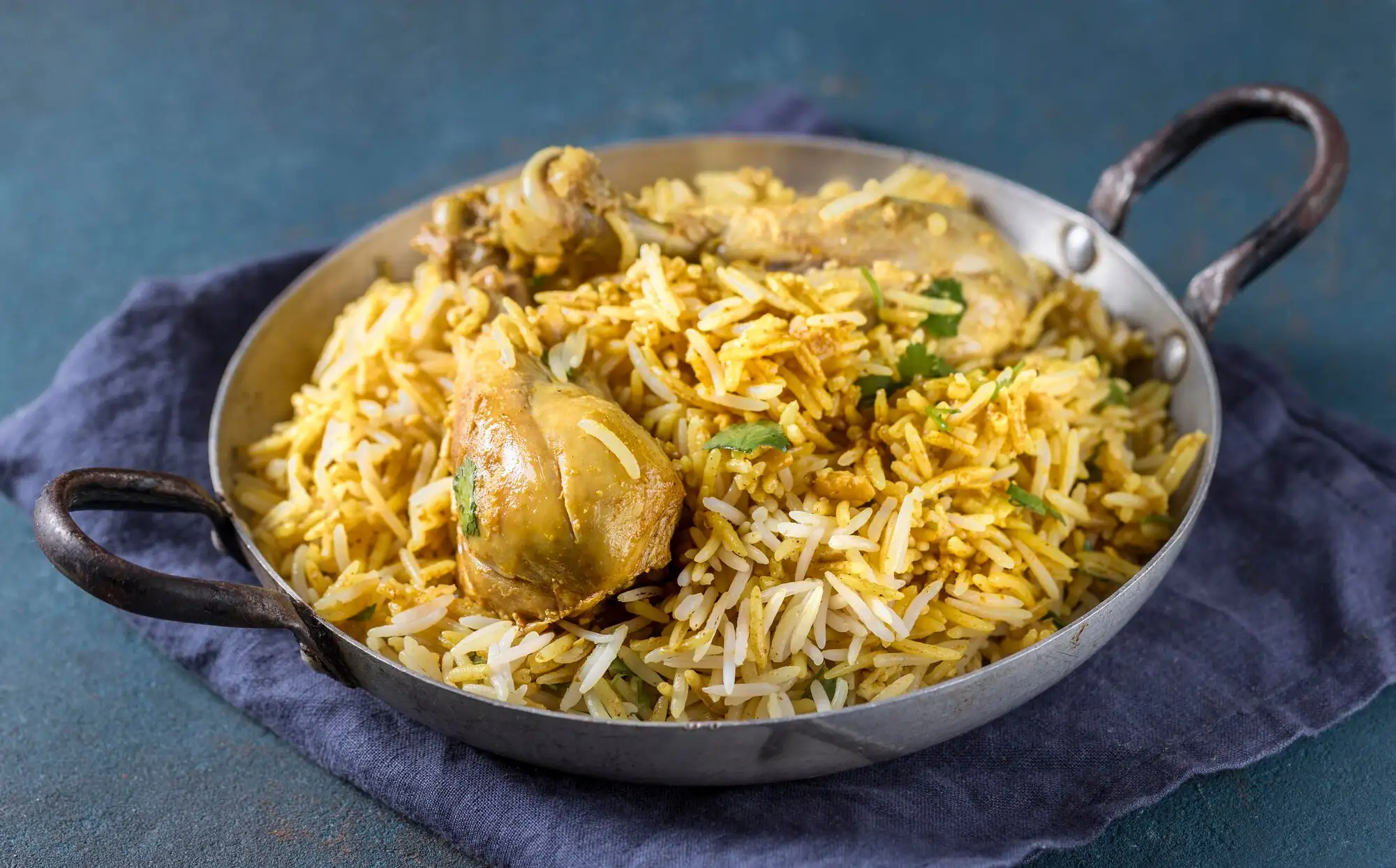
Dum is a technique, not a flavour. The pot gets sealed, often with a ring of dough around the lid, so the trapped steam finishes the rice and meat together over low heat. That slow build is what gives a proper dum biryani its layered smell and keeps the grains separate instead of mushy. Skip the seal and rush the heat and you get spiced rice, which is fine, just not the same dish.
What Does “Briyani Dam” Refer To?
The “briyani dam” spelling that shows up in searches is just a scrambled version of biryani dum. Same dish, same sealed-pot method, no difference beyond the typo.
Dum Biryani Styles Worth Knowing Before You Order
Dum biryani isn’t a single recipe. Region changes nearly everything, from the rice to the heat to the way the meat goes in.
- Hyderabadi kacchi: Raw marinated meat layered under parboiled rice and sealed, so the meat braises in its own juices. Deep flavour, soft meat, and the hardest version to get right.
- Hyderabadi pakki: Meat cooked first, then layered with rice and finished on dum. More forgiving, which is why it’s common for chicken during a busy service.
- Andhra: Built around firepower, with green chillies and chilli paste doing the talking. Less perfume, more burn.
- Lucknowi (Awadhi): The floral, restrained cousin. Lighter spicing, closer to a fragrant pilaf in spirit.
- Malabar: Kerala’s take, made with short-grain Jeerakasala rice, fried onions, nuts and a gentler spice profile.
Knowing which camp a biryani falls into tells you more than the menu photo ever will.
Hyderabadi Dum vs Andhra Biryani: Which One Matches Your Spice Limit?
This is the split most people actually feel on the plate. Hyderabadi dum leans on balance, fried-onion sweetness, herbs and the aroma that hits when the pot opens. Andhra goes the other way and treats heat as the headline rather than a footnote. If a slow, fragrant spoonful is the goal, Hyderabadi wins; if the point is to wake up your whole mouth, Andhra is the order.
Is Andhra Biryani Spicier than Hyderabadi Biryani?
Yes, usually by a clear margin. Andhra cooking uses more green chilli and chilli paste, so the heat arrives early and stays through the meal.
How Pakistani Dum Biryani Differs from the Indian Versions
Pakistani dum biryani shares the sealed-pot method but tends to run heavier on whole spices and tomato, with a sharper, tangier finish than most Hyderabadi plates. Sindhi-style versions push further with extra chilli, dried plums and potato. The rice often carries a stronger marbling of colour, since the masala is bolder going in. For anyone searching “pakistani dum biryani sg,” the closest match on an Andhra-focused menu is usually the spicier, masala-forward biryani rather than the milder northern styles.
Where Can You Find Pakistani-Style Dum Biryani in Singapore?
Little India is the obvious starting point, where several spots lean Pakistani or Sindhi. Food threads on r/singapore point regulars toward that stretch more often than the tourist-heavy options elsewhere.
What Separates a Good Plate of Dum Biryani from a Forgettable One
A good dum biryani gives itself away before the first bite. The signals are easy to read once you know them.
- Separate grains: Long basmati that stays distinct and dry, never clumped or gluey.
- Honest layering: Meat buried through the rice instead of dropped on top as an afterthought, with fresh cilantro and mint folded in.
- Real aroma: A smell that fills the table when the lid lifts, built from saffron, whole spices and steam rather than essence.
- Meat that holds: Tender but intact, especially bone-in mutton, which carries more flavour into the rice.
- The right sides: Raita to cool things down, and something sharp like mirchi ka salan to push back against the spice.
Miss two or three of these and it’s a rice dish wearing a biryani’s name.
Ordering Dum Biryani in Singapore Without Overthinking It
Choosing gets easier once heat tolerance and appetite are settled. A few quick calls cover most situations.
- Start with heat: Hyderabadi or Lucknowi for milder, Andhra or Pakistani-style for serious spice.
- Match the protein: Mutton for depth, chicken for an easier midweek plate, vegetarian biryani when the masala does the heavy lifting.
- Mind the portion: Dum biryani runs filling, so one plate often stretches across two lighter eaters.
- Don’t skip the sides: Raita and a salan change the dish more than most people expect.
Order with those four in mind and the gamble mostly disappears. Plenty of the back-and-forth on what counts as “real” biryani plays out in public too, from Quora’s biryani topic to local food reviews worth a scan before you commit.
References
- Slurrp, “Biryanis From South India: Key Differences, History, And Types”: https://www.slurrp.com/article/biryanis-from-south-india-key-differences-history-and-types-1738219915361
- The News Minute, on Hyderabadi biryani variants and the dum method’s roots under the Nizams: https://www.thenewsminute.com/article/there-s-more-just-one-type-hyderabadi-biryani-and-here-s-how-different-they-are-61085
- Michelin Guide Singapore, biryani listings in Little India (industry reference): https://guide.michelin.com/sg/en/singapore-region/singapore/restaurants